
News
PT Oil Terminal Karimun Responds to Bloomberg’s Misleading Characterization of Its Role in Regional Oil Trade
KARIMUN, Indonesia – 13 July 2026 – PT Oil Terminal Karimun (“OTK”) has reviewed the Bloomberg article published on 10 July 2026 and rejects its misleading and disproportionate characterization of Karimun as “Asia’s hub for Russian oil.”
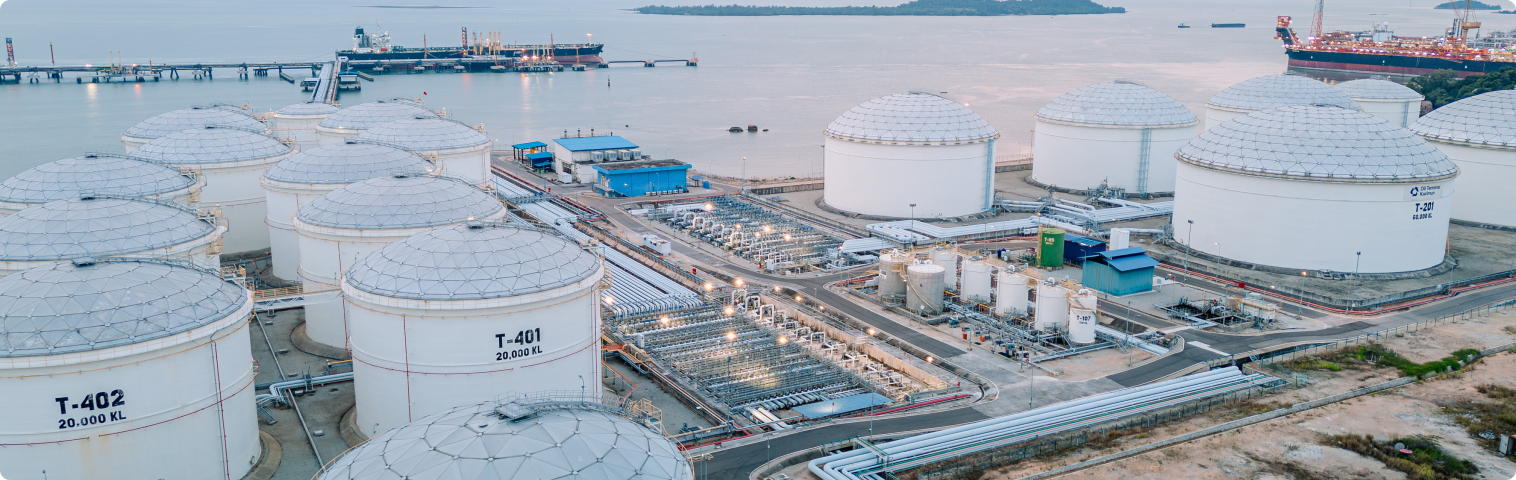
OTK is an independent Indonesian storage and logistics terminal providing conventional infrastructure services to international customers. It does not trade petroleum products, determine the commercial origin or destination of customers’ cargoes, or control regional or international trade flows.
OTK operates in accordance with applicable Indonesian laws and regulations and maintains appropriate customer, vessel, sanctions-screening and documentation due-diligence procedures appropriate to its role as an independent terminal operator.
The Bloomberg article does not present evidence that OTK engaged in sanctions circumvention, deceptive shipping practices, false documentation or any other unlawful activity. Nor does it identify any finding by any competent regulatory or enforcement authority that OTK has violated applicable law or regulatory requirements. Instead, the article relies primarily on inferences drawn from the activities of third-party traders, shipowners and counterparties over whom OTK has no ownership, control or operational authority.
OTK also disputes the methodology of the volumes attributed to the terminal in the article. The article does not explain how it distinguishes between physical terminal throughput, customs-recorded values, cargo ownership and transactions conducted by independent third parties, or why those fundamentally different categories should be treated as equivalent.
More fundamentally, OTK’s total throughput, covering products of all origins, represents only a very small proportion of the petroleum volumes handled through major storage, trading and transshipment hubs in Southeast Asia and internationally. Russian-origin products lawfully handled through OTK also represent an insignificant proportion of wider regional and global Russian-origin petroleum flows. Any assessment of OTK’s significance must therefore be based on comparable data, including terminal capacity, actual physical throughput and OTK’s share of relevant regional flows, rather than headline trade values or aggregated third-party transactions.
OTK is a comparatively small independent terminal, with limited capacity and utilization relative to the major terminals and ports operating across the region. The article provides no comparative analysis or assessment of regional infrastructure demonstrating that OTK occupies a central position for Russian or international petroleum trade among the regional facilities.
Bloomberg’s own article describes an extensive international supply chain involving numerous ports, terminals, traders, vessels and receiving facilities across Singapore, Malaysia and other regional and global markets. The article does not explain why OTK, rather than the larger trading, storage and transshipment hubs within that network, should be characterized as its principal Asian hub.
The decision to title the article around Karimun and characterize it as “Asia’s hub for Russian oil” therefore creates a distorted impression that is not supported by comparative data concerning OTK’s capacity, throughput or share of Russian-origin petroleum flows in Asia. It disproportionately singles out one comparatively small Indonesian terminal while larger ports and terminals handling substantially greater overall petroleum volumes are treated merely as secondary components of the wider trading system. A terminal’s inclusion in a supply chain does not, by itself, establish that it is the central or defining hub of that system.
Even without access to complete global statistics concerning every movement of Russian-origin petroleum products, the disparity between the limited capacity and throughput of OTK and the scale of international petroleum trade is evident. Presenting OTK as a central Asian hub is therefore neither proportionate nor supported by the commercial realities or any comparative evidence that OTK occupies a materially more significant position in comparison to the other facilities of the regional market.
OTK is also concerned that the article repeatedly associates the terminal with the alleged conduct, ownership structures and commercial decisions of independent third-party traders, cargo interests and shipowners. OTK rejects any attempt to attribute the activities of independent third parties to OTK.
OTK is deeply concerned by the selective emphasis and conclusions presented in the Bloomberg article. Such reporting has caused serious and unjustified reputational harm to OTK, its employees, its customers and Indonesia’s energy infrastructure, despite the absence of any established legal or regulatory violation by the company.
The publication of these allegations have adversely affected OTK’s commercial relationships and business operations. The terminal continues to face substantial difficulties in attracting and retaining customers and maintaining sustainable operations. These commercial consequences have arisen notwithstanding the absence of any finding by a competent authority that OTK has engaged in unlawful conduct.
Despite these challenges, OTK remains committed to making every reasonable effort to remain operational, support Indonesia’s long-term energy security and infrastructure development, serve its customers responsibly, and conduct its activities transparently and in full compliance with applicable legal and regulatory requirements.
OTK calls upon Bloomberg and other media organizations to report on the company objectively, fairly and without selective or disproportionate emphasis. OTK further calls upon Bloomberg to reconsider and clarify its misleading characterization of Karimun and OTK’s role within a broader regional supply chain, to ensure that readers are not left with an inaccurate impression of the company’s scale, function or involvement in regional petroleum flows.
The company reserves all rights in relation to inaccurate, misleading or defamatory statements concerning its ownership, activities and operations.